
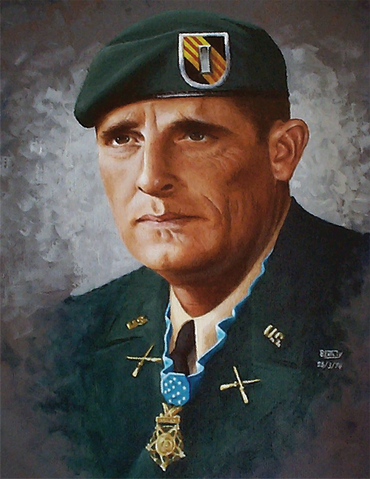
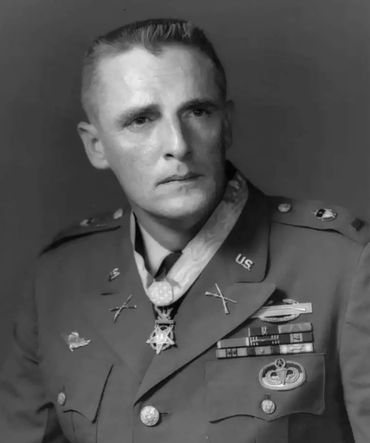
2nd Lieutenant* Charles Quincy WILLIAMS
DETAILS
- RANK: FIRST LIEUTENANT (RANK AT TIME OF ACTION: SECOND LIEUTENANT)
- CONFLICT/ERA: VIETNAM WAR
- UNIT/COMMAND: DETACHMENT A, 5TH SPECIAL FORCES GROUP,
1ST SPECIAL FORCES - MILITARY SERVICE BRANCH: U.S. ARMY
- MEDAL OF HONOR ACTION DATE: JUNE 9 - 10, 1965
- MEDAL OF HONOR ACTION PLACE: DONG XOAI, REPUBLIC OF VIETNAM
ADDITIONAL DETAILS
- ACCREDITED TO: FORT JACKSON, RICHLAND COUNTY, SOUTH CAROLINA
- AWARDED POSTHUMOUSLY: NO
- PRESENTATION DATE & DETAILS: JUNE 23, 1966
THE WHITE HOUSE, PRESENTED BY PRES. LYNDON B. JOHNSON - BORN: SEPTEMBER 17, 1933, CHARLESTON, CHARLESTON COUNTY, SC, UNITED STATES
- DIED: OCTOBER 15, 1982, COLUMBIA, SC, UNITED STATES
- BURIED: ARLINGTON NATIONAL CEMETERY (MH) (65-1471), ARLINGTON, VA, UNITED STATES
Photo Gallery
CITATION
CITATION
1st Lt. Williams distinguished himself by conspicuous gallantry and intrepidity at the risk of his life above and beyond the call of duty while defending the Special Forces camp against a violent attack by hostile forces that lasted for 14 hours.
1st Lt. Williams was serving as executive officer of a Special Forces detachment when an estimated Viet Cong reinforced regiment struck the camp and threatened to overrun it and the adjacent district headquarters. He awoke personnel, organized them, determined the source of the insurgents' main effort, and led the troops to their defensive positions on the south and west walls. Then, after running to the district headquarters to establish communications, he found that there was no radio operational with which to communicate with his commanding officer in another compound. To reach the other compound, he traveled through darkness but was halted in this effort by a combination of shrapnel in his right leg and the increase of Viet Cong gunfire.
Ignoring his wound, he returned to the district headquarters and directed the defense against the first assault. As the insurgents attempted to scale the walls and as some of the Vietnamese defenders began to retreat, he dashed through a barrage of gunfire, succeeded in rallying these defenders, and led them back to their positions. Although wounded in the thigh and left leg during this gallant action, he returned to his position and, upon being told that communications were reestablished and that his commanding officer was seriously wounded, 1st Lt. Williams took charge of actions in both compounds.
Then, in an attempt to reach the communications bunker, he sustained wounds in the stomach and right arm from grenade fragments. As the defensive position on the walls had been held for hours and casualties were mounting, he ordered the consolidation of the American personnel from both compounds to establish a defense in the district building. After radio contact was made with a friendly air controller, he disregarded his wounds and directed the defense from the district building, using descending flares as reference points to adjust air strikes. By his courage, he inspired his team to hold out against the insurgent force that was closing in on them and throwing grenades into the windows of the building.
As daylight arrived and the Viet Cong continued to besiege the stronghold, firing a machine gun directly south of the district building, he was determined to eliminate this menace that threatened the lives of his men. Taking a 3.5 rocket launcher and a volunteer to load it, he worked his way across open terrain, reached the berm south of the district headquarters, and took aim at the Viet Cong machine gun 150 meters away. Although the sight was faulty, he succeeded in hitting the machine gun.
While he and the loader were trying to return to the district headquarters, they were both wounded. With a fourth wound, this time in the right arm and leg, and realizing he was unable to carry his wounded comrade back to the district building, 1st Lt. Williams pulled him to a covered position and then made his way back to the district building where he sought the help of others who went out and evacuated the injured soldier. Although seriously wounded and tired, he continued to direct the air strikes closer to the defensive position.
As morning turned to afternoon and the Viet Cong pressed their effort with direct recoilless-rifle fire into the building, he ordered the evacuation of the seriously wounded to the safety of the communications bunker. When informed that helicopters would attempt to land as the hostile gunfire had abated, he led his team from the building to the artillery position, making certain of the timely evacuation of the wounded from the communications area, and then on to the pickup point. Despite resurgent Viet Cong gunfire, he directed the rapid evacuation of all personnel.
Throughout the long battle, he was undaunted by the vicious Viet Cong assault and inspired the defenders in decimating the determined insurgents. 1st Lt. Williams' extraordinary heroism is in the highest traditions of the U.S. Army and reflect great credit upon himself and the Armed Forces of his country.


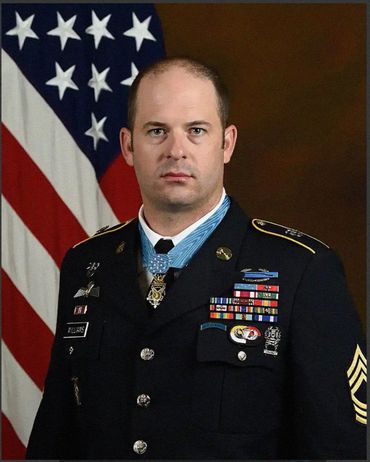
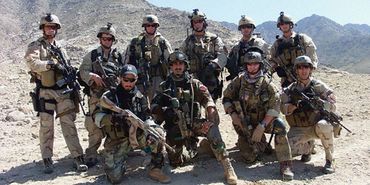
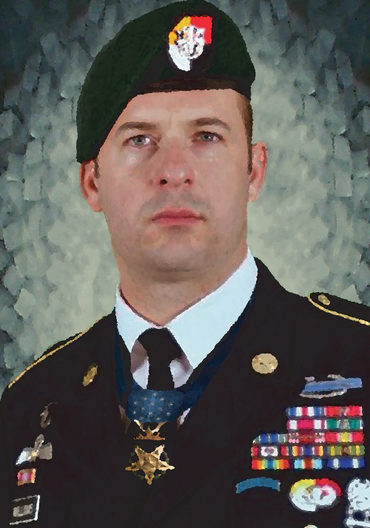
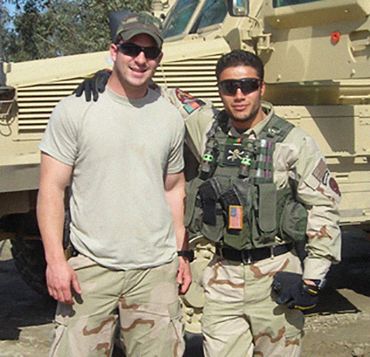
Sergeant* Matthew O WILLIAMS
DETAILS
- RANK: SERGEANT (HIGHEST RANK: SERGEANT MAJOR)
- CONFLICT/ERA: WAR ON TERRORISM (AFGHANISTAN)
- UNIT/COMMAND: OPERATIONAL DETACHMENT ALPHA 3336, COMPANY C, 3RD BATTALION, SPECIAL OPERATIONS TASK FORCE-33,
COMBINED JOINT SPECIAL OPERATIONS TASK FORCE - AFGHANISTAN - MILITARY SERVICE BRANCH: U.S. ARMY
- MEDAL OF HONOR ACTION DATE: APRIL 6, 2008
- MEDAL OF HONOR ACTION PLACE: SHOK VALLEY, NURISTAN PROVINCE, AFGHANISTAN
ADDITIONAL DETAILS
- ACCREDITED TO: HOUSTON, HARRIS COUNTY, TEXAS
- AWARDED POSTHUMOUSLY: NO
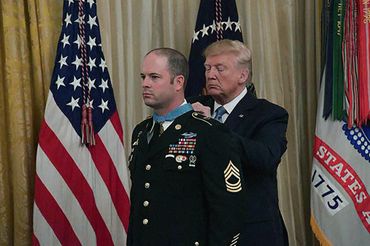
- PRESENTATION DATE & DETAILS: OCTOBER 30, 2019
AT THE WHITE HOUSE BY PRESIDENT DONALD J. TRUMP - BORN: OCTOBER 3, 1981, CASPER, NATRONA COUNTY, WY, UNITED STATES
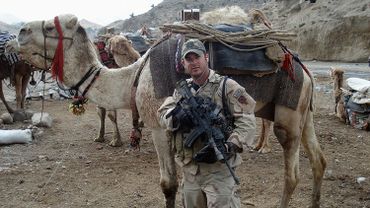
Photo Gallery
CITATION
CITATION
Sergeant Matthew O. Williams distinguished himself by acts of gallantry and intrepidity above and beyond the call of duty on April 6, 2008, while serving as a Weapons Sergeant, Special Forces Operational Detachment Alpha 3336, Special Operations Task Force-33, in support of Operation ENDURING FREEDOM.
Sergeant Williams was part of an assault element inserted by helicopter into a location in Afghanistan. As the assault element was moving up a mountain toward its objective, it was engaged by intense enemy machine gun, sniper, and rocket-propelled grenade fire. The lead portion of the assault element, which included the ground commander, sustained several casualties and became pinned down on the sheer mountainside. Sergeant Williams, upon hearing that the lead element had sustained casualties and was in danger of being overrun, braved intense enemy fire to lead a counter-attack across a valley of ice-covered boulders and a fast-moving, ice cold, and waist-deep river. Under withering fire, Sergeant Williams and his local national commandos fought up the terraced mountainside to the besieged element.
Arriving at the lead element’s position, Sergeant Williams arrayed his Afghan commandos to provide suppressive fire, which kept the insurgent fighters from overrunning the position. When the Team Sergeant was wounded, Sergeant Williams braved enemy fire once again to provide buddy-aid and to move the Team Sergeant down the sheer mountainside to the casualty collection point. Sergeant Williams then fought and climbed his way back up the mountainside to help defend the lead assault element that still had several serious casualties in need of evacuation.
Sergeant Williams directed suppressive fire and exposed himself to enemy fire in order to reestablish the team’s critical satellite radio communications. He then assisted with moving the wounded down the near-vertical mountainside to the casualty collection point. Noting that the collection point was about to be overrun by enemy fighters, Sergeant Williams led the Afghan commandos in a counter-attack that lasted for several hours.
When helicopters arrived to evacuate the wounded, Sergeant Williams again exposed himself to enemy fire, carrying and loading casualties onto the helicopters while continuing to direct commando firepower to suppress numerous insurgent positions. His actions enabled the patrol to evacuate wounded and dead comrades without further casualties. Sergeant Williams’ complete disregard for his own safety and his concern for the safety of his teammates ensured the survival of four critically wounded soldiers and prevented the lead element of the assault force from being overrun by the enemy.
Sergeant Williams' actions are in keeping with the finest traditions of military service and reflect great credit upon himself, Combined Joint Special Operations Task Force-Afghanistan, Special Operations Command Central, and the United States Army.
